Closing the Globe
by James Montgomery
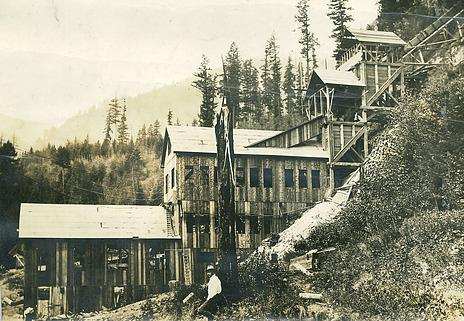
The Mill in Dedrick, 1913
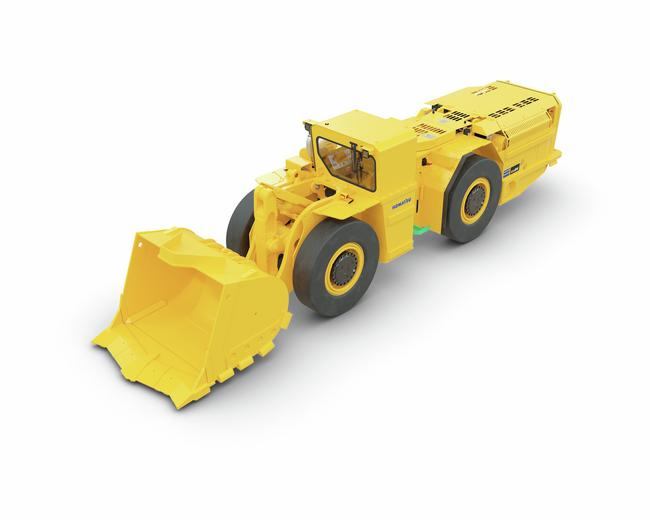
The muck just kept coming down, so I just kept taking it out, running in and out, back and forth with the mucking machine. Muck is the rubble created when you blast rock, making a drift, or tunnel. I was running a mucking machine that looked like the one pictured below, but mine was green. You sit sideways, and go back and forth. The muck just kept coming. We knew something was wrong.
The previous crew had told us they thought something was wrong from the sounds of the shots. We were running two shifts, with four hour breaks between, so we could get in twice as many rounds in a day. After you touch off a round of dynamite at the face of the drift, you have to wait for the gases to clear out. Even with the fancy ventilation system they had going, we had to wait awhile. Four hours was enough.
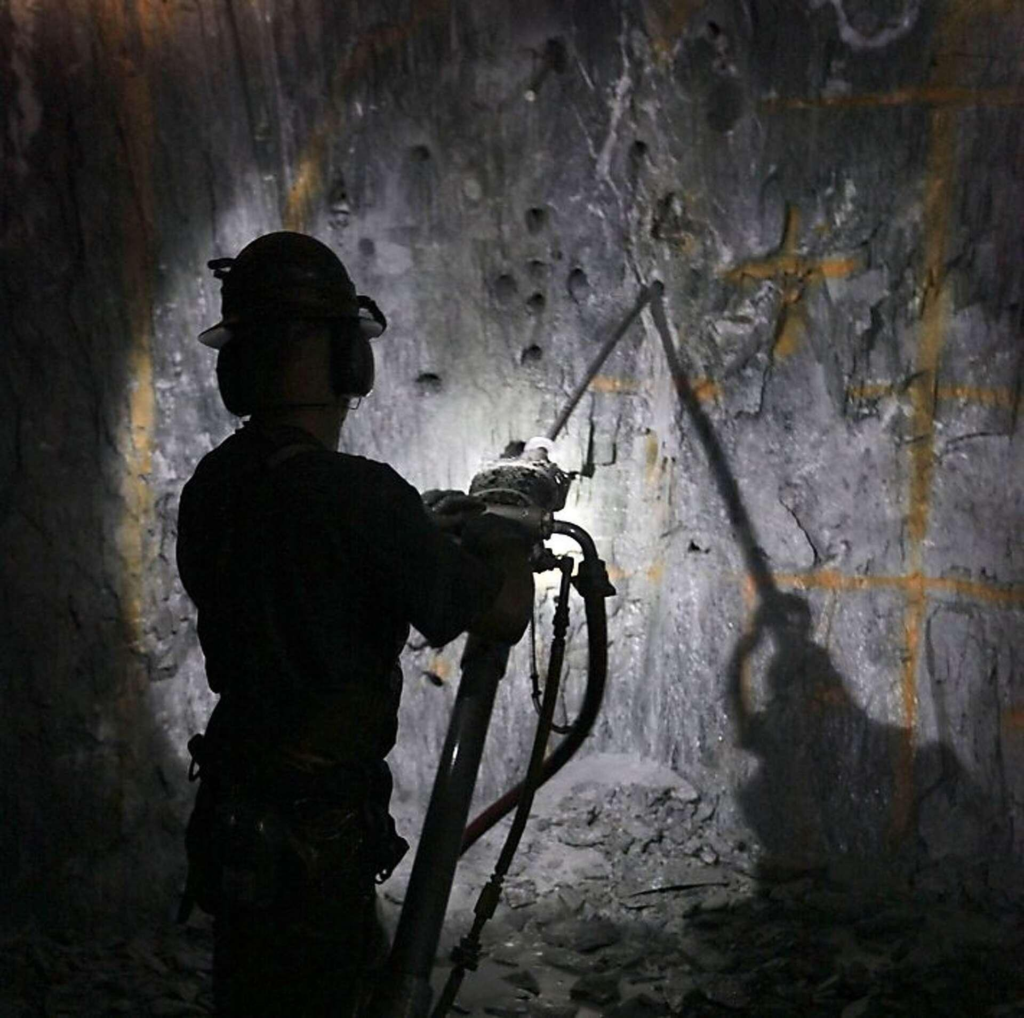
Each shift was putting in one round a day. Each round extended six feet into the rock, creating a drift 9 feet high and 9 feet wide. To put in a round, you drill holes into the rock face, fill the holes with dynamite, and blast the rock. Then you muck it out, back and forth, back and forth.
I just kept mucking it out, but finally I could see a space between the muck pile and the top of the drift. A small black space. After a few more trips, the space opened up enough that I could see there was a big hole above the pile. There was enough space to get my shoulders through, so I climbed up the pile and shone my headlamp around. Nothing above but a big black open space. It looked spooky, and sounded spooky, too. Rock was still coming down from somewhere up above. I jumped on the machine and got the hell out of there.
Outside, I told the walking boss what I had seen. “Wait right here. Don’t go back in there.”
Alright, I won’t. Happy to comply. He went to get the higher ups.
It was 1983, and we were opening up the old Globe Mine, on top of Weaver Bally, near Weaverville. Gold was up to $800 an ounce, by far the highest it had ever been. All over Trinity County and the other gold-rush areas, old mines were being reopened. Ore that would not pay to mine in 1918, when the Globe shut down, was now worth going after, and mining companies were sinking money into exploration.
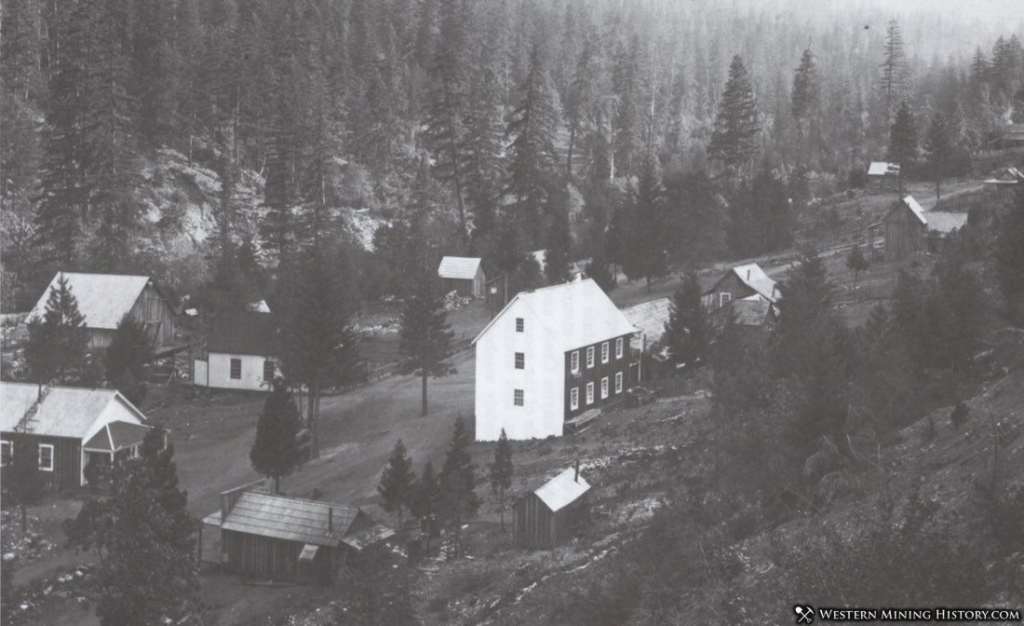
This story really begins in 1850, when the ‘49ers reached Trinity County. As the Mother Lode in the Sierras got claimed up and worked out, the prospectors went looking, and they found gold up Canyon Creek. They panned their way up the side creeks and gullys until they found the gold-bearing quartz on top of Weaver Bally. Then they started to dig, and drill and blast, following the lode underground. The ore was sent down on a tramway to the mill below, on Canyon Creek, where the town of Dedrick grew up to support the mine. They worked the Globe, and the Chloride and Bailey below it, until 1918. When the mill closed down, the town disappeared.
For me, the story begins in the summer of 1983, when Frankie DiMasio told me that a mining company out of Nevada was starting work on top of Weaver Bally, and they were looking for hands. Frankie was an experienced miner, and was already working there. I was out of work at the time, and it was not too far to go from my home in Hayfork, so I went and applied, and they hired me. There was work for anybody with even a little mining experience, which was exactly what I had.
The first day on the job, they put me to working under Tom, the lead guy, along with three or four other men. The first project was to shore up the adit, which in this case was a pretty good sized underground room, just inside the opening to the mine. The first thing we did was bar down the air-slack. Air-slack is what happens when rock is exposed to the air. It becomes crumbly and slabby and broken up and dangerous. Barring it down is just what it sounds like; you take a long steel bar and pry the rock down. The main goal is to find the solid rock underneath. Another important goal is to not get killed by the rock you are bringing down. It can be exciting.
After a day or two, there was enough space to start shoring up the adit, and Tom started building sets, which are essentially post-and-beam frames, used as the structural foundation for the timber used to hold the back. The back is the roof of the tunnel, or drift. He chose me to help him, as I was experienced with chain saws, which we used to cut the 8×8’s and other timber for the sets. The other guys continued barring down the rest of the adit.
First we put in the main sets, starting at the right-hand front corner of the adit. In this case, the back was pretty high, maybe 12 to 15 feet, so he started building pony sets on top of them. The main sets were about 8’ high, and the pony sets were about 6’ high. Building inside a mine is not like building in a subdivision. You have to work with the rock, and build the sets snug and tight up against the rock, to keep it from moving. The principle is, “if it don’t move an inch, it can’t move a foot.” There are no square corners, and wedges and braces are used to hold it all tight. It is as much an art as a science. At the front corner where two sets came together, with a pony set on top, there was a very complex angle, requiring a special block to fit snugly between them.
Tom was a master craftsman, skilled in the ways of mining and timbering up old workings. About 50 years old, he was a couple of inches shorter than me, and stoutly built. You can tell when somebody really knows what he is doing, and he really did, but he was having a hard time measuring and calculating the angles and lengths of the block which would tie the sets together. It had to be right, as it was the corner piece of the structure. The block had to be cut out of an 8×8, about 18” long, with three different intersecting angles; compound angles coming into compound angles. I could see what he was trying to accomplish, and I said, “You know, I believe I can cut that by eye.”
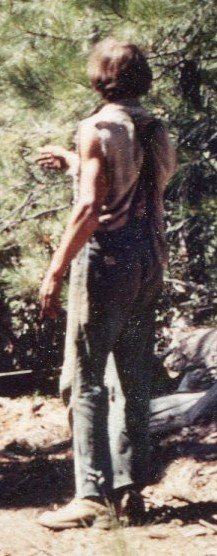
He looked down at me for a minute. He knew what I was; a 32 year old logger with a little mining experience and some carpentry skills. He said, “Alright, go ahead and try.”
So I took a couple of measurements and made a couple of pencil marks, and cut it how it looked to me. I handed it up to him, and he put it in place and gave it a whack with his single-jack hammer. It clicked right into place. You could hear it; a very nice solid sound. Sometimes you get lucky.
Tom pointed his finger at me from up on the set and said, “You’re with me.”
So from then on, Tom was the lead guy, and I was his right-hand man. I liked it, because he was really, really good at it, and I learned an awful lot from him about timbering mines. Other guys got moved around, back and forth between the Globe and the Chloride and Bailey, nearby mines which were also being opened up, but not me. I stayed with Tom at the Globe.
Finally, we finished timbering up the adit, to where it felt safe to work out of. Typically, the main work and staging areas are outside of the mine, unless it’s a really big mine, but in this case, we had a very large room to work out of, so supplies were stored in it. Explosives, of course, were stored in the magazine, down by the main office, and brought up as needed.
Then the drilling began. We were drilling with jack legs, which I had used before, but we were putting in 6 foot rounds, rather than 4, like I was used to, and the drift was bigger than I was used to, because we used a mucking machine to get the rock out, rather than hand-mucking like I had done at the Kelly Mine. It’s a lot faster.